

An engagement ring represents more than jewelry. It carries meaning, intention, and the promise of a shared future. Across generations and cultures, this cherished piece has become a visible expression of devotion, marking the beginning of a lifelong journey between two people.
The tradition of giving engagement rings has evolved over centuries. Earlier customs focused on simple bands made from natural materials, while modern designs showcase artistic craftsmanship, precious metals, and carefully selected gemstones. Although styles continue to change, the emotional significance remains constant. Receiving a ring often symbolizes trust, affection, and the excitement of building a life together.
Diamonds have long been associated with engagement rings because of their brilliance and durability. Their ability to reflect light creates an appearance that many people connect with elegance and lasting commitment. However, contemporary preferences extend far beyond classic diamond settings. Sapphires, emeralds, rubies, moissanite, and other stones have gained popularity among couples seeking individuality and personal expression.
Selecting an engagement ring involves balancing aesthetics, lifestyle, and sentiment. Shape plays a major role in defining appearance. Round cuts offer timeless beauty, while oval stones create an elongated effect. Princess designs present modern sophistication, whereas cushion styles blend softness with vintage charm. Pear, emerald, and marquise cuts introduce distinctive character for those wanting something less conventional.
Metal choice contributes significantly to overall appeal. Platinum is admired for strength and natural brightness. Yellow gold delivers warmth and tradition. White gold creates a sleek, contemporary finish, while rose gold introduces romantic tones with a subtle uniqueness. Each option complements gemstones differently and influences the final visual impact.
An engagement ring is far more than a glittering piece of jewelry
it is a profound token of commitment, a wearable narrative of love, and a significant investment intended to last a lifetime. Navigating the world of fine jewelry can feel overwhelming with the sheer volume of options available, yet understanding the core principles of gemstone quality, architectural design, and modern materials can simplify the journey. If you choose a classic diamond, your path begins with decoding the four primary attributes established by the Gemological Institute of America. The cut dictates how brilliantly the stone reflects light, maximizing its sparkle and fire, while clarity measures the presence of tiny internal imperfections. Opting for an “eye-clean” stone—where flaws cannot be seen by the naked eye—offers excellent value without paying a premium for absolute perfection. Color is graded from colorless to light yellow, with near-colorless ranges offering a bright look that costs significantly less than chemically pure alternatives. Finally, carat denotes the physical weight of the gem; purchasing just below whole-number thresholds can save substantial money while looking identical in size to the untrained eye. Beyond the technical stone metrics, the overall architecture of the ring defines its personality and aligns with the wearer’s personal style. While round brilliant stones remain a permanent staple due to their unmatched light reflection, elongated shapes like oval, emerald, and marquise cuts are highly favored for their ability to flatter the hand by making the fingers appear more slender. The setting anchors this central gemstone and dictates the design theme, ranging from a timeless solitaire that highlights a singular gem to a halo setting that circles the perimeter with smaller diamonds to create the illusion of a much larger center stone. Active individuals often favor a modern bezel setting, which wraps a protective metal rim entirely around the gem for superb security.
Although the ancient Egyptians are sometimes credited with inventing the engagement ring, and the ancient Greeks with adopting the tradition, the history of the engagement ring can only be reliably traced as far back as ancient Rome.[5][6][7][8][9]
In many countries, engagement rings are placed on the ring finger of the left hand. At one time it was believed that this finger contained a vein (the vena amoris) that led to the heart. This idea was popularized by Henry Swinburne in A treatise of Spousals, or Matrimonial Contracts (1686).[10] The story seems to have its origin in the ancient Roman book Attic Nights by Aulus Gellius quoting Apion’s Aegyptiacorum, where the alleged vein was originally a nervus (a word that can be translated either as “nerve” or “sinew”).[11]
The popular belief that an engagement ring was originally part of the bride price which represented purchase and ownership of the bride, has been called into question by contemporary scholarship.[12][8]: 42 note 105
Choosing an engagement ring marks a defining moment
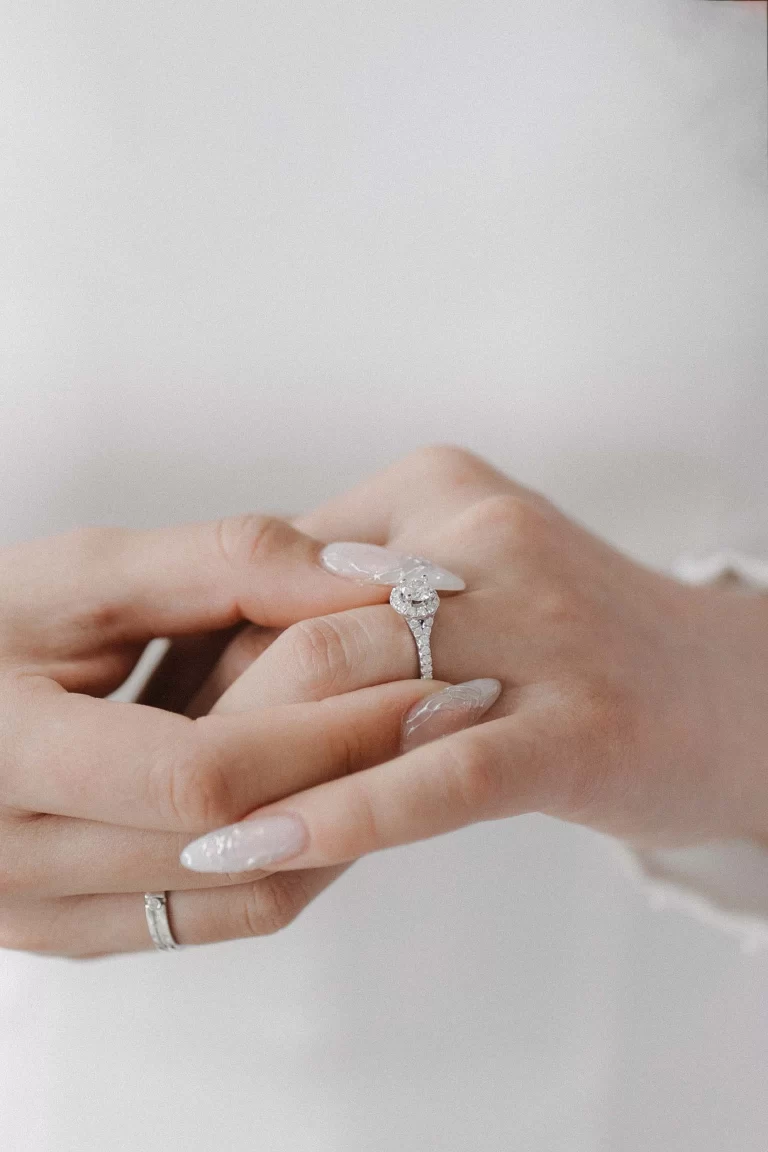
blending symbolism, craftsmanship, artistry, and personal narrative into a single cherished object. While tradition often centers diamonds, contemporary couples explore sapphires, moissanite, emeralds, and lab-grown stones, each carrying distinct brilliance, durability, hue, and lore. Cut determines sparkle: round shapes maximize fire, princess offers geometric clarity, oval elongates fingers, emerald showcases step-facet elegance, pear merges teardrop romance, marquise feels vintage, cushion softens corners, radiant combines brilliance with trimmed edges, and Asscher echoes Art Deco architecture. Beyond silhouette, proportions, symmetry, and polish grades documented on grading reports influence light performance far more than carat alone, making informed comparison essential. Color scales range from colorless to faint yellow or brown, though fancy vivid blues, pinks, and greens command admiration for rarity. Clarity examines inclusions and blemishes under magnification; many are invisible unaided, allowing savvy shoppers to prioritize visual beauty over flawless paper credentials. Carat measures weight, yet two stones of identical mass can appear different sizes depending on depth, girdle thickness, and spread. Settings frame the centerpiece: solitaire emphasizes singularity, halo surrounds with smaller accents for amplification, three-stone motifs represent past-present-future, pavé bands add shimmer along the shank, bezel encircles for protection, tension creates floating illusion, cathedral lifts with arches, and vintage milgrain adds delicate texture. Metal choice affects tone, maintenance, and longevity. Platinum resists tarnish, develops patina, and secures gems firmly due to density. White gold offers similar appearance through rhodium plating, requiring periodic replating. Yellow gold conveys warmth and heritage, while rose gold imparts romantic blush from copper alloy. Alternative metals like palladium and titanium appeal for lightness or hypoallergenic properties, though resizing options differ. Lifestyle matters: active hands benefit from low-profile mounts, channel-set accents, or bezel designs that shield edges from impact.